
Picture this: your kitchen trash overflows with pizza boxes, veggie peels, and soda cans all mixed together. Recycling day arrives, but the truck skips your bin because of confusion. You pay extra for hauls and wonder about the planet. A simple waste sorting system fixes that fast. It cuts your waste by half, saves on pickup fees, and boosts that good feeling inside.
In 2026, US cities push compost programs, and AI sorters at centers hit 95% accuracy. Households join in with electric composters trending big. You’ll follow a straightforward 4-step plan. Set it up in one afternoon, and sorting becomes second nature.
Figure Out the Basic Waste Categories for Your Area
Start here because rules vary by city or county. Most US homes use four main categories in 2026: recyclables, compost or organics, trash, and special items. Check your local guidelines first. Apps and sites make it easy.
For example, use CityRuleLookup for trash rules by city or your county website. California’s producer-funded recycling differs from New York’s organics push. States like Colorado and Oregon now have EPR laws where companies fund packaging recycling. This means cleaner streams for you.
Rinse recyclables to avoid contamination. Skip wish-cycling, or hoping unaccepted items work. Emerging rules target plastic films separately.
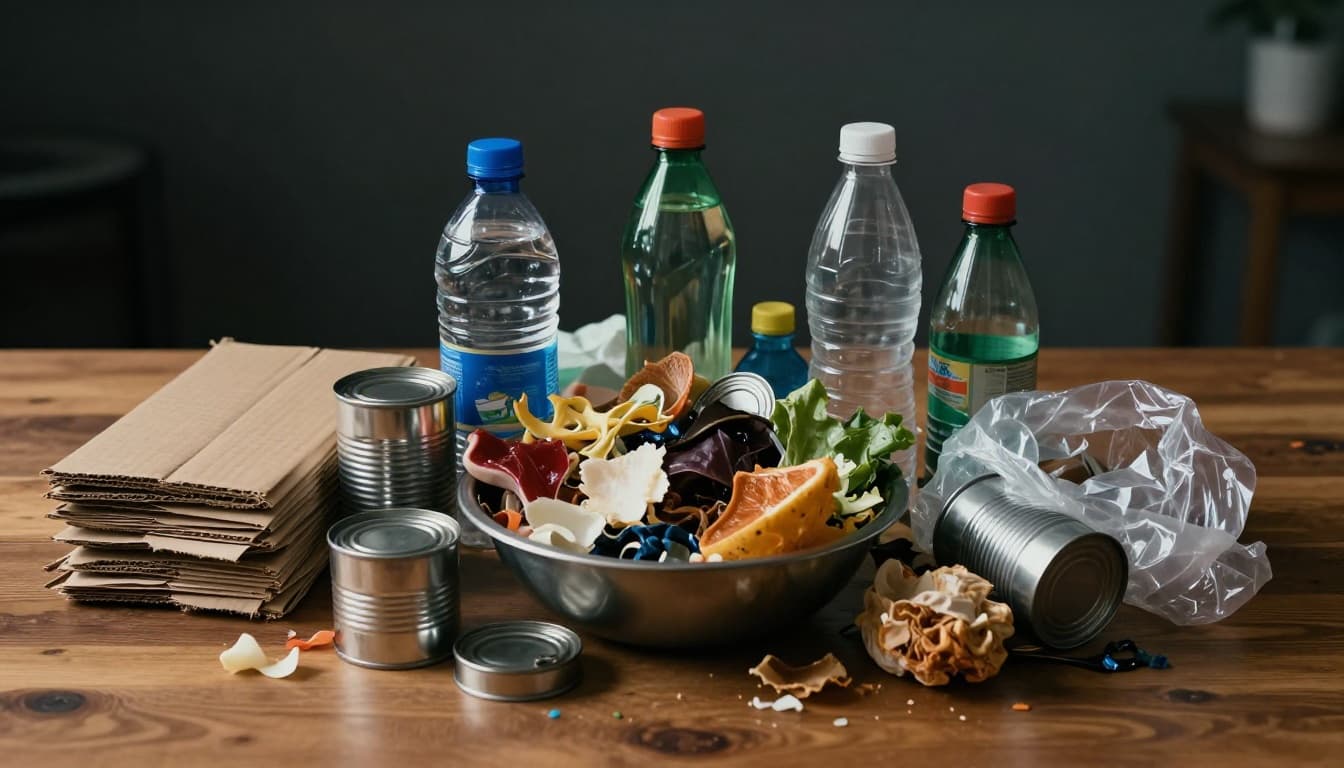
Common items fit these groups based on EPA trends.
Recyclables That Go in the Blue Bin
Paper and cardboard head here first: clean boxes, newspapers, junk mail. Flatten them to save space. Metals include aluminum cans, steel tins, and foil balls bigger than a golf ball.
Plastics stick to types 1, 2, and 5: water bottles, milk jugs, yogurt tubs. Glass goes in some areas; check yours. AI tech at centers now spots these with 95% accuracy, even if a bit dirty. See the EPA’s list of common recyclables for exact matches.
Empty and rinse everything. Lids stay off for sorting.
Compost and Organics for the Green Bin
Food scraps make up 30-40% of trash, so use this bin. Veggie peels, coffee grounds, eggshells work well. Yard waste like leaves and grass clippings join in.
No meat or dairy in many spots to cut smells. Electric composters like the GEME Terra II turn scraps odor-free in days. They’re hot in 2026 with urban homes leading. Cities like San Diego offer curbside pickup, so compost shines.
Add a countertop unit if space allows. It fits apartments perfect.
Trash, Special Waste, and What to Handle Separately
The black bin takes the rest: soiled plastics, diapers, Styrofoam. Everything non-recyclable lands here.
Special items need drop-offs. Batteries and e-waste go to stores or events; EPR laws in states like New York help. Textiles to charities, hazardous stuff like paints to facilities. Use Recycle Coach for local drop spots.
Plan weekly trips. It keeps bins clean.
Pick Bins That Fit Your Kitchen and Space Perfectly
Next, grab bins that match your life. Aim for 3-4: black for trash, blue for recycling, green for compost, maybe clear for specials. Sizes depend on family count; 13-gallon works for most.
Choose durable plastic or steel with lids. Colors help spot them quick. Budget sets under $100 stack for small spots. Motion sensors cut mess.
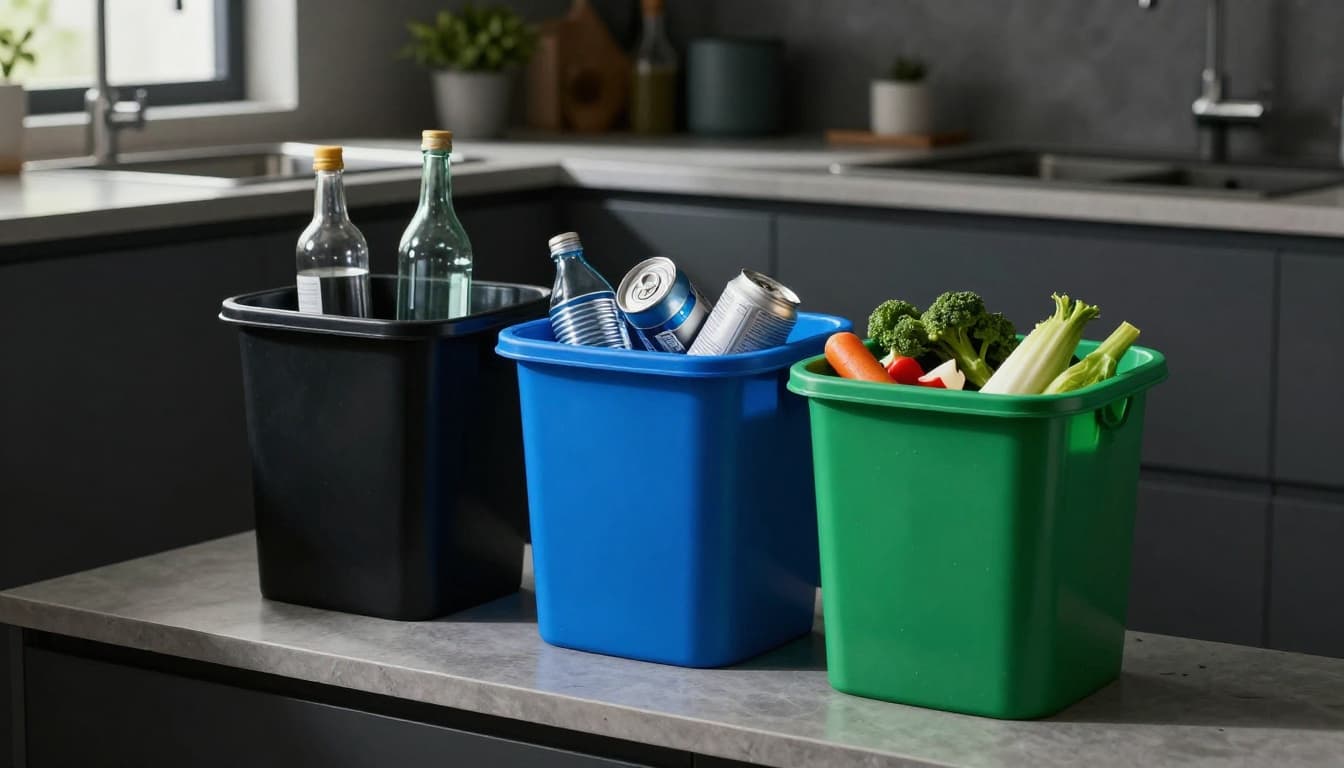
Popular picks include Rubbermaid step-ons and simplehuman dual units. They handle daily loads smooth.
Best Kitchen Setup for Daily Use
Slim under-sink pull-outs fit trash and recycling near the sink. A small compost bin sits on the counter.
Motion lids open hands-free. For families, try Eko Mirage dual-compartment cans.
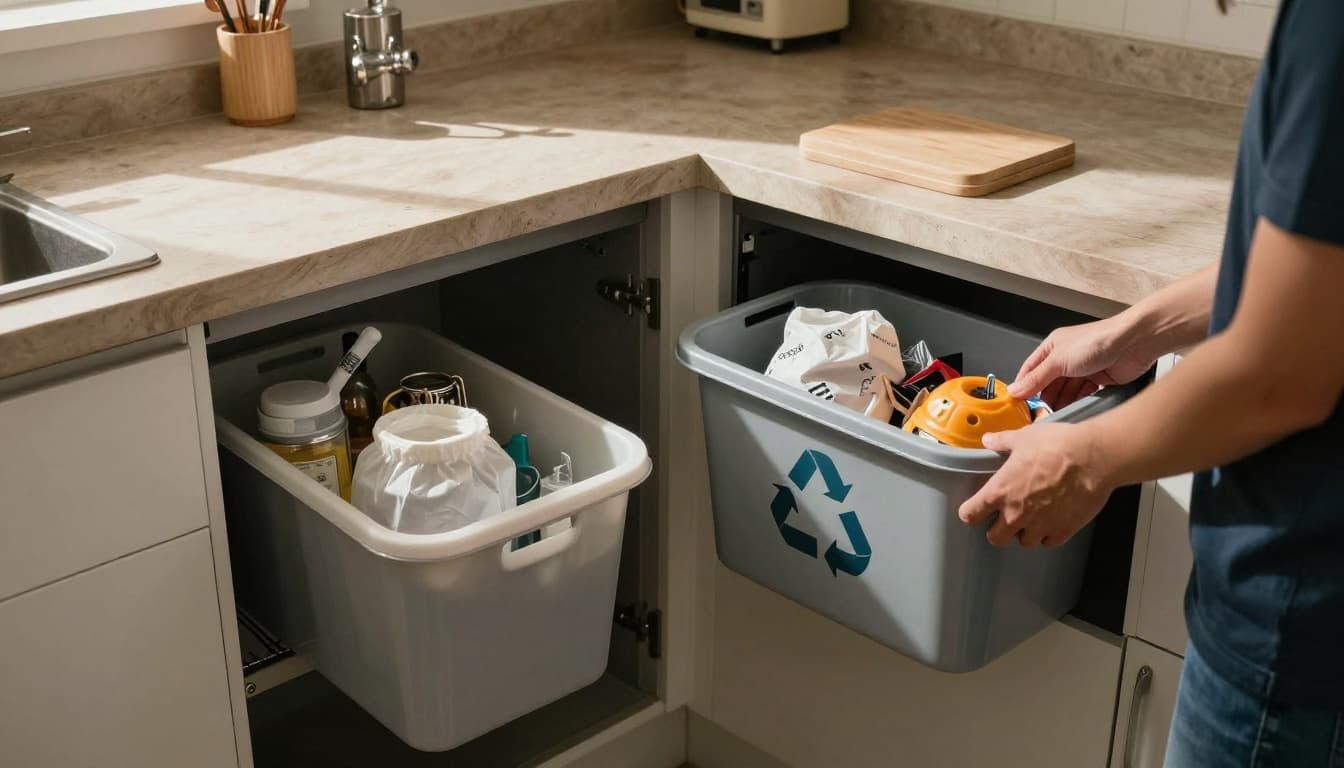
These spots cut trips outside. Keep them 2 feet apart for easy grabs.
Garage or Outdoor Options for Bigger Loads
Go bigger here: 20-30 gallon tumblers for yard waste, rolling totes for bulk.
Place mats under to catch drips. Lids seal smells.
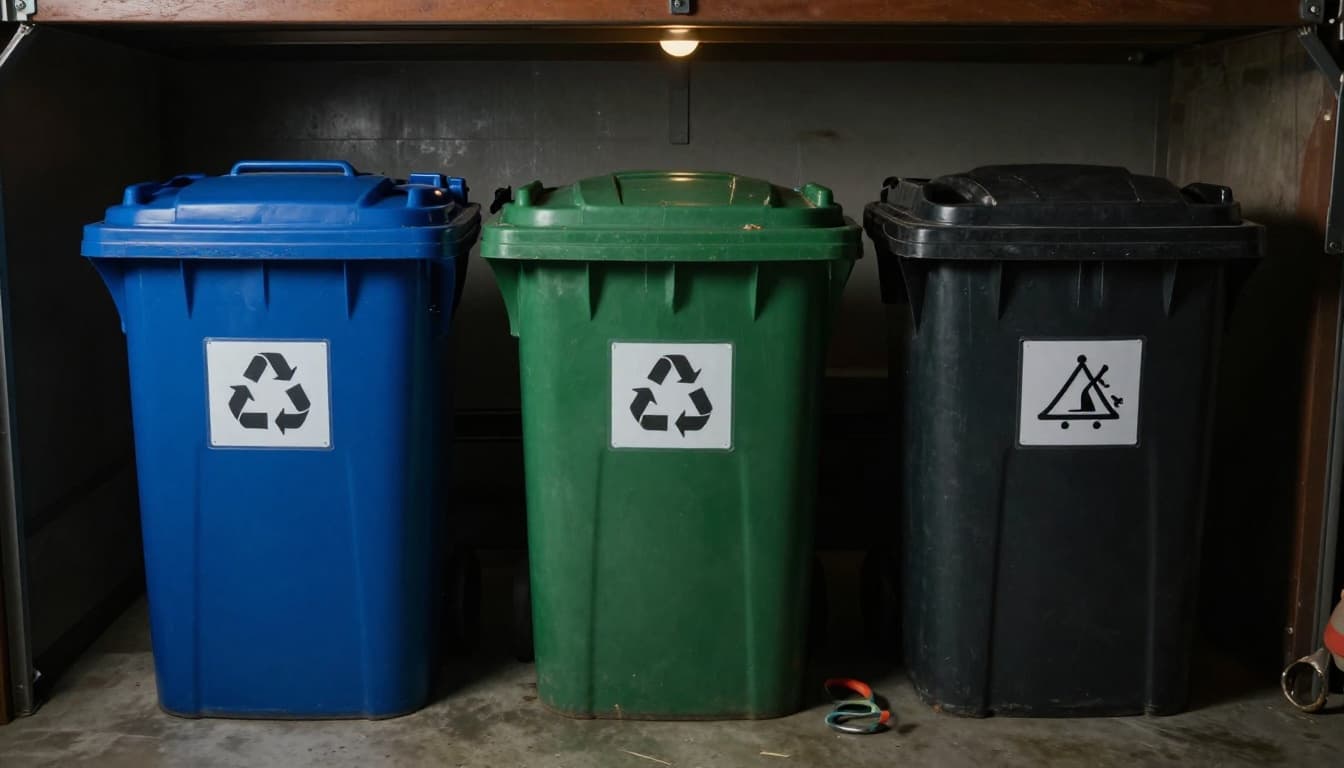
Wheels make haul day simple. Ideal for suburbs.
Label Bins Clearly and Place Them Where Waste Happens
Labels turn confusion to habit. Use waterproof stickers with big words and pics: apple for compost, bottle for recycle.
Laminate them. Add rules like “Rinse First” or “No Bags.”
Place bins where waste builds: kitchen doors, counters, garage entry. Keep them 2-3 feet apart. Empty weekly on schedule.
This setup flows natural. Track progress first month with a checklist.
Smart Label Designs Everyone Can Follow
Print pics of common items. Families add their own.
Update for local changes, like new glass rules. Icons beat words for kids.
Keep designs simple. They stick fast.
Prime Spots to Keep Sorting Effortless
Under sinks hide pairs. Counters hold compost.
Doors catch on-the-go tosses. Test spots a week.
Adjust as needed. Convenience wins.
Avoid These Traps and Turn Sorting Into a No-Brainer Habit
Watch for pitfalls. Plastic bags jam machines; dump them out first.
Greasy pizza boxes contaminate loads. Wet waste mixes bad with dry.
Rinse all recyclables. Involve family from day one.
Start small: one bin a week. Apps remind rules. Benefits pile up: less methane, cheaper hauls, cleaner towns.
In 2026, new labels and EPR ease it more. Check common recycling mistakes from ecomaine for extras.
Top Mistakes New Sorters Make and Quick Fixes
No bags in bins; they tangle sorters. Remove lids from bottles.
Soiled paper goes trash. Rinse rule saves whole batches.
Crush cans light; too flat confuses AI.
Fix quick, and batches process smooth.
Daily Habits That Make It Stick Forever
Hold family chats weekly. Reward good weeks.
Visible bins prompt tosses right. Waste drops 50% soon.
Track savings. It motivates.
You now know the 4 steps: nail categories with local checks, pick fitting bins, label and place smart, dodge traps with habits. Grab those bins today. Search your city rules on Recycle Coach. Share your setup in comments; what’s your biggest win?
In 2026, higher recycling rates mean real change. Your home leads the way to a cleaner spot. Start now; the planet thanks you.